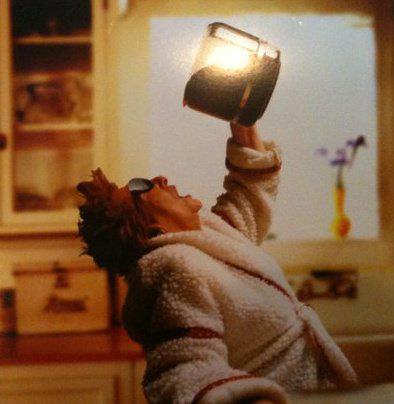
Some days are like that, when you’re very last nerve just goes…
It’s when I feel the craziest that I need to stop and consider what’s making me crazy, and what will bring me peace. It usually means looking at the crazy and loving it.

Some days are like that, when you’re very last nerve just goes…
It’s when I feel the craziest that I need to stop and consider what’s making me crazy, and what will bring me peace. It usually means looking at the crazy and loving it.

“Sea. What kind of emotions does the sea or ocean make you feel? Do you remember the first time you went in the water? Had a wave crash on you? Felt the sand burn your feet? Do you feel more peaceful around water? Do you hate the beach? What’s the most interesting thing about the sea for you?”
This picture was taken at St. Joe’s Beach, Florida in August. It’s one of my favorite areas, though really, any beach is one of my favorite places. I’ve always loved the beach. I think the beach has loved me back, too. It’s always a source of tranquility and refreshment for me.
My earliest recollection of the ocean is Miami Beach, though my mother has told me stories of going to Varadero Beach in Cuba. I wish I could remember, but even if I did, I would have been too young to enjoy the ocean by swimming out until my feet couldn’t touch the bottom.
I don’t do that anymore although I have plenty of happy memories from the days I’d snorkel at Key Biscayne (El Farito) and scuba diving in Pennekamp Park.
I’ve seen the crystal waters of the Caribbean, the Gulf of Mexico from the beaches of the Yucatan peninsula and the Florida panhandle, enjoyed swimming in the Atlantic Ocean from Key West to Jones Beach in New York, and dipped my toes in the cold waters of New England and across the ocean to the gorgeous, and freezing La Concha in San Sebastian. From there I’ve moved across Spain to Barceloneta and meandered along la Costa Brava and skipped through many beaches in the French Riviera. I’ve seen the beautiful Pacific in Monterey, California and Homer, Alaska.
Of all those beaches my favorite is always the one I happen to be enjoying at the moment. Especially if it’s with this guy:

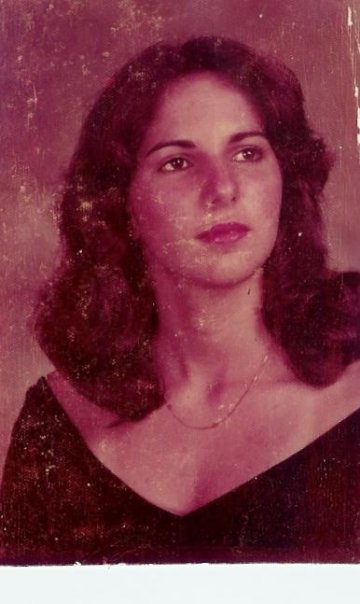
Thirty-five years ago, on a Labor Day weekend not unlike this one, I met my husband.
He was a handsome young computer programming instructor at the community college,

and I was [gasp!] in high school.
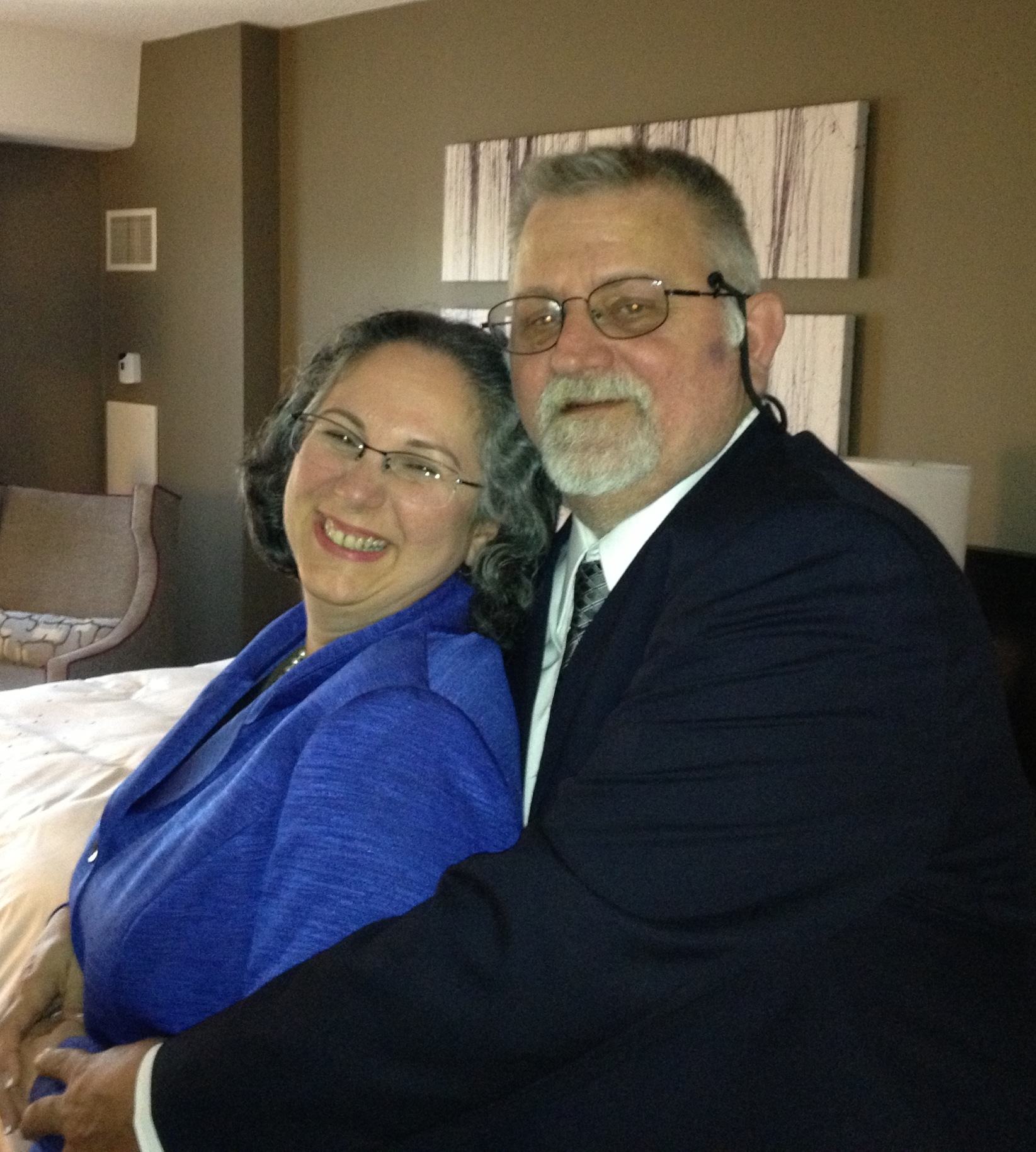
We became good friends. And that friendship, over the years, blossomed into something else. The fall after I graduated from college we got married. In fact, our anniversary is in a few days — we tried to get married as close as we could to the date when we met. His idea. What a sentimental sweetie.
He still is.
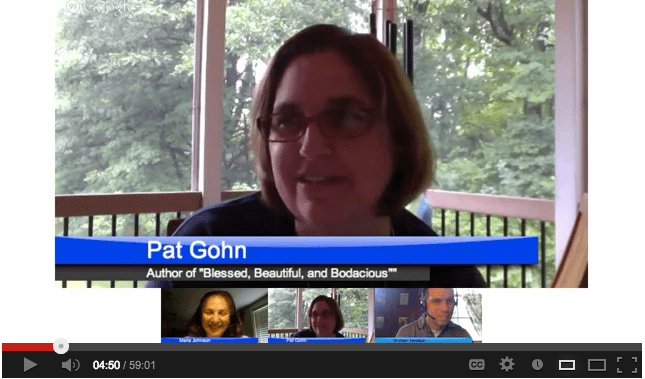
William Newton and I welcome Pat Gohn to this episode of Catholic Weekend, direct from a cozy porch down a country lane.
We catch up with Pat, and launch into discussions about Pope Francis’ encyclical, Lumen Fidei, and his recent comments about a theology of women.
Check out the show notes, listen to the podcast, or watch on the Catholic Weekend page.

Check out the collection of other 7 Quick Takes Friday posts, hosted at Jennifer Fulwiler’s blog, Conversion Diary.
Classes started this week. I’m exhausted.
Thus, this.
I’m restarting The Eye of the World by Robert Jordan. Because I thought The Lord of the Rings was too long, so the concept of like 13 books, and another dozen or so prequels isn’t daunting at all.

I have discovered a love of chicken and dumplings. I’m sure I was exposed to this delectable food when I was a kid, and just thought it looked like cat vomit or something and rejected it for the next 40-something years.
Oh, how I wish I had come up with a better comparison….
I am making an effort to drink more water. I’m mostly successful, thanks to a fancy schmancy grown-up sippy cup.

Took my lunch to work all week and congratulated myself for being a good girl. Celebrated with a Snickers candy bar.
I’ve decided to dust off my 35 mm camera and go back to taking fun pictures. It’s a shame to let all those lenses and filters and cool gadgets sit in a bag, unused. I wonder if I can remember how to load film?
I wanted to rant like a crazy woman after reading Allison Benedikt’s manifesto on private schools vs. public schools where she suggests parents who send their children to private schools are bad persons. I really really wanted to be clever and bitingly sarcastic, but when I finally sat down to write, the best I could muster was a little pity.
Her premise certainly got my attention: if parents who have the means to send their children to private school would channel their children into the public school system instead, then the school system would benefit from those parents who would work hard to improve the schools. Not doing so is selfish.
A new spin on distribution of wealth? Only this time, it’s a distribution of homeroom mommies? Seriously?
She acknowledges that this improvement would take generations, and in the meantime, those generations of students who could have had excellent educations, won’t, and it’s no big deal — it’s all worth the sacrifice for the common good. After all, she had a crappy education and doesn’t know anything about art and culture and all that stuff, and look at her, she’s turned out ok.
That’s a pretty odd thing to be proud of, but she’s probably right. One assumes she’s a productive and contributing citizen. Of course, I’m just assuming here….
Benedikt ends her ludicrous “fix” for the state of public education by using the usual emotional appeal, “Don’t just acknowledge your liberal guilt — listen to it.”
I found myself periodically looking at the site’s flag at the top of the page to verify that I didn’t accidentally click on a link to The Onion.
Why should anyone need to feel guilty about being financially successful and in the position to pay for things that will enrich their children’s lives? And why on earth would she demonize those parents and call them “bad persons” or as Max Lindenman clarifies, “bad Americans?”
I pretty much dismissed the whole thing for what it is, the ignorant screed of an attention-hungry misguided koolaid-drinking nut. Or as she self-identifies, judgmental.
Except, she says some things that are true. Or at least sound like they could be true:
I get it: You want an exceptional arts program and computer animation and maybe even Mandarin. You want a cohesive educational philosophy. You want creativity, not teaching to the test. You want great outdoor space and small classrooms and personal attention. You know who else wants those things? Everyone.
Whatever you think your children need—deserve—from their school experience, assume that the parents at the nearby public housing complex want the same.
I think that’s valid in most cases. However, there’s a big difference between wanting something, and wanting something, so you work for it. I want to lose 20 pounds; meanwhile, wait a second while I go serve myself another bowl of ice cream.
Surprisingly, I also agree with Benedikt that the fix will likely take generations, although the solution does not depend upon having parents run strong PTAs. Don’t misunderstand me, strong parental support is not just a good, but an important part of any educational program. Children need to see and know that their parents support them.
The bigger problem, what she doesn’t address at all, is that the public school system(s) needs reform. In fact, more than reform, there needs to be a complete and total makeover. Of the school system and society.
But here’s the thing, we probably don’t even have to focus so much on reform as we do on accountability.
Corruption and a lack of oversight at every level have been damaging our children for decades, and the political machine that re-elects school boards that are more interested in perks than learning are to blame.
So are superintendents who are sycophantic to these boards.
And the principals, who tolerate mediocrity and poor performance.
And teachers who don’t teach.
And students who don’t take responsibility for their learning.
AND PARENTS WHO DON’T TAKE RESPONSIBILTY FOR THEIR CHILDREN.
Oh. Did I just say that out loud?
No, not white Go-Go boots (I think I owned a pair when I was a kid. Really.). And not Nancy Sinatra.
Perhaps something like this:

Only, really, more like this:

It seems I’ve been dreaming about walking for about a week. Not hiking mountains with beautiful vistas. Not hiking through the woods hoping to find a cool spring. Nope.
I’ve been walking through streets and alleys in what appears to be a seaside town somewhere along the east coast, probably the northeast because it doesn’t look like anything I’ve experienced in Florida, Georgia, and the Carolinas. Now add the creep factor of cutting through people’s yards and picking up snippets of their daily lives (at least I’m walking through and not actively being a Peeping Tom Bego).
When I was an undergrad majoring in psychology, I used to keep a dream journal. I don’t remember what any of this means. My guess is probably as good as yours.
Too bad I’m not getting the health benefits of all this walking, but I am waking up with a clear head. Go figure.

“Focus. This week’s challenge is inspired by Matthew George’s post on focus, in which he introduced us to the basics of depth of field and aperture.”
There’s a little play on words here. What are you focused on?
Some weeks ago I got a delightful email request from Lisa Hendey to interview me for the Catholic Podcaster series she has at CatholicMom.com. I have a tough act to follow, with two of the sweetest people I’ve had the pleasure to meet leading this series, from Catholic Vitamins: Deacon Tom Fox and his charming wife, Dee. Go check them out — you’ll discover we share a favorite podcast 🙂
Anyway, life happens, you know, and I totally forgot about this interview until this afternoon, when my phone exploded with a series of Tweets. I use push notifications sparingly, but now the cat is out of the bag. The whole world (or the three people who read this blog) now know I get Lisa’s tweets on my phone. Oops.
So I get this hilarious message:

I’m like, wut? The last thing I wrote for Lisa was a couple of weeks ago, Glad for Glads, and I sure haven’t done anything exciting since then — classes started! So of course, I immediately go see, because, well, she said I was a star.
She used the goofiest picture she could find, too, with me in a tarnished halo. At least she didn’t use this one:
It’s fall. Again.
By fall I mean we’re back to school even though it’s still August and there’s plenty of summer left. The new school year seems to start earlier and earlier. That’s probably because it’s still August.
When I was a kid, by the middle of summer I secretly wished school would hurry up and start.
That hasn’t changed much. Now that I’m on the other side of that desk, I still look forward to the beginning of the term.
There’s something about the fall term, more than spring or summer, that speaks to new beginnings. It’s an opportunity for a reboot, and truth be told, I can always use a reboot.
It’s an opportunity for discovery, too.
I love teaching because it puts me in the position of always learning. I’m not talking about the traditional sense of life-long learning, which we all should embrace, but in the practical honing of my skills. I learn how to be a better teacher by teaching.
I didn’t grasp this early in my career, probably because I was too green and insecure in my abilities to reveal those insecurities to my students. (To be honest, my greatest fear in the classroom, still, is to be discovered as a fraud).
So, I put on a persona of expertise and stood in front of the group and professed. I professed a lot. Lots and lots of lectures where I stood there and spoke my pearls of wisdom and my students took notes and then spat them back at me in various assessments. I was good, and they were good. But somehow, we weren’t good together.
So what changed?
Over time I became more comfortable with what I was doing. I discovered, a little bit at a time, that perhaps I was meant to be doing this. I lost the fear of being wrong or not having an answer, and shared that with my students. It occurred to me that they might know answers to things I didn’t know.
I gave myself permission to not know, and invited my students to fill in the blanks.
I took that risk to help them think for themselves. Too many years of spitting back facts clouded their ability to think critically. And then I thought, what if the problem is that they are afraid to think critically?
What if the problem lies in, not the cognitive domain, but in something else — their ability to recognize their worth. That they have something to say. I’ve tried, with varying levels of success, to help my students find their voices.
“Teaching, therefore, asks first of all the creation of a space where students and teachers can enter into a fearless communication with each other and allow their respective life experiences to be their primary and most valuable source of growth and maturation. It asks for a mutual trust in which those who teach and those who want to learn can become present to each other, not as opponents, but as those who share in the same struggle and search for the same truth.”
I hope that’s the environment I create in my classrooms this term. A safe place to share and learn from each other. To do this, I have to share a little bit of myself, enter into a certain level of vulnerability — it won’t make me weak; it will make me strong.
There are fancy names for this…those of you who are teachers will recognize that what I’m talking about here is an engaged pedagogy — but the root of that is much deeper than an educational philosophy.
It comes from a Truth that I know — that I’ve always known and lived by, though God surely knows I haven’t always been able to articulate this, and it’s only by His grace that I haven’t messed it up too badly.
To reach my students I need to begin by acknowledging their fundamental dignity as human beings.
Too much of my job relegates students to data points. Measurable outcomes keep me employed, I suppose, but it’s the other thing, my vocation, that keeps me coming back every year.
It’s the knowledge that something great happens in the classroom, even if it’s not measurable. Even if it’s only a seed that I’ll never see germinate.
I’ll try to remember this as I begin a new term, and remind myself again and again … and again if I have to, when things get slow or difficult, that I am a teacher. That I have answered God’s call to this vocation and that it is my duty, the commitment I’ve made, to serve God by serving my students. That I am called to love them.
 another cup of coffee